Mangrove Protection
(Published in the newspaper Amigoe on the 19th of November 2025)
In the last article, we talked about the dangers to mangroves. Now, let’s dive into what we can do to protect them. We’ll explore the actions of individuals, organizations, and educational initiatives dedicated to mangrove conservation. This overview isn’t complete, and I’m sure I missed some amazing folks and organizations out there.
Legislation for the protection of mangroves
The media keeps talking about the necessity for an Environmental Impact Assessment (EIA) law and the protection of mangroves. The EIA is a legal tool that helps us figure out the social benefits and costs of an investment. You know, even though an investment can make money, the hidden social costs like destroying nature and mangroves, with all their effects, are often passed on to society. By making these social costs clear, we can find ways to avoid them. We call this ‘mitigation.’ Sometimes, mitigation isn’t possible, and the social costs might be higher than the benefits, so we might decide not to make the investment. But here’s the thing: the EIA isn’t yet a law on Curaçao, and the mangroves aren’t protected yet. Curaçao is falling behind other countries in making the EIA a legal requirement and protecting the mangroves. So, it’s up to our lawmakers to act now!
Mangrove education
Did you know that some organizations are dedicated to teaching us about mangroves? Carmabi, for instance, has a Department of Nature and Environmental Education. They run various nature education programs, and one of them is all about mangroves. It’s interactive and includes a PowerPoint presentation and fun games about mangroves for group 7. After that, they take the group on a tour of the Curaçao Rif Mangrove Park in Otrobanda. If you’re interested in learning more about nature education, check out Carmabi’s website at www.carmabi.org.
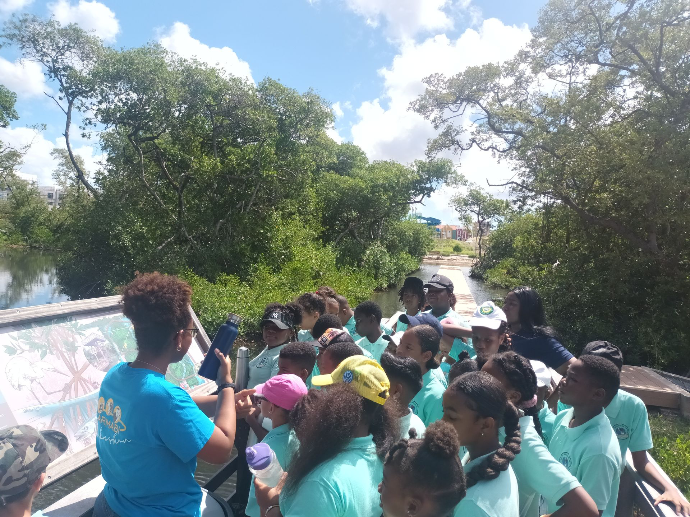
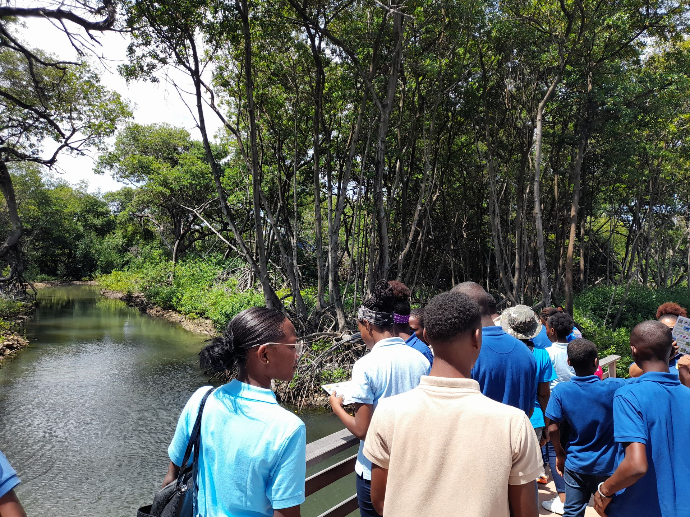
Mangrove education program Carmabi
Planting and protection of mangroves
Mangroves are in trouble! Only 55 hectares (about 110 football fields) of the once-thriving mangroves remain. Very well-known is of course Ryan de Jongh, the "mangrove man" who has been planting mangroves in many places on Curaçao for many years.

Ryan de Jongh explains the planting of mangroves
There are other organizations that are either indirectly or structurally involved in planting mangroves or cleaning up polluted mangrove areas. These include Uniek Curaçao, Amigu di Tera, Carmabi, and the Curaçao Outdoor Industry Alliance (COIA). Movimentu Safe Zakito is specifically focused on protecting the mangroves in the lagoon near the Koredor. The Dutch Caribbean Nature Alliance (DCNA) and the Worldwide Fund for Nature (WWF Dutch Caribbean) provide support in general. The Corendon Mangrove Beach Resort is also involved in cleaning up mangrove areas. Sea Shore Properties is currently in the process of building Lake View Residence in Willibrordus and has plans for planting mangroves at Rif St. Mary.
Protecting mangrove areas
Curaçao has a mangrove park called the Curaçao Rif Mangrove Park. It’s right next to the Corendon Mangrove Beach Resort at the Megapier in Otrobanda. This 7-hectare park was made by the Curaçao government. Carmabi manages the park. You can walk through the park on paths constructed on poles in the water, or you can join an educational tour with a guide. From a watchtower, you can see the whole park and all the birds. There are also canals in the park. You can go on a kayak tour with a guide.
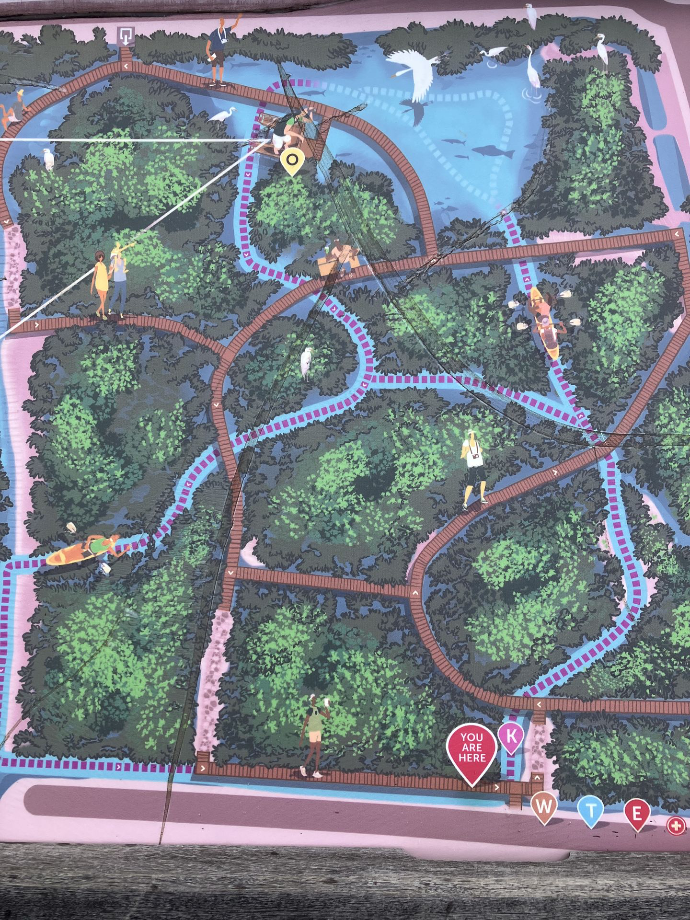

Information Mangrove Park
The mangroves in this park are protected. The mangroves are also a big draw for tourists. The government has plans to build a visitor center to replace the old containers where the tickets are sold now and connect the park to the mangrove lagoon west of Corendon to double the size of the park. Unfortunately, these plans have not yet been realized.
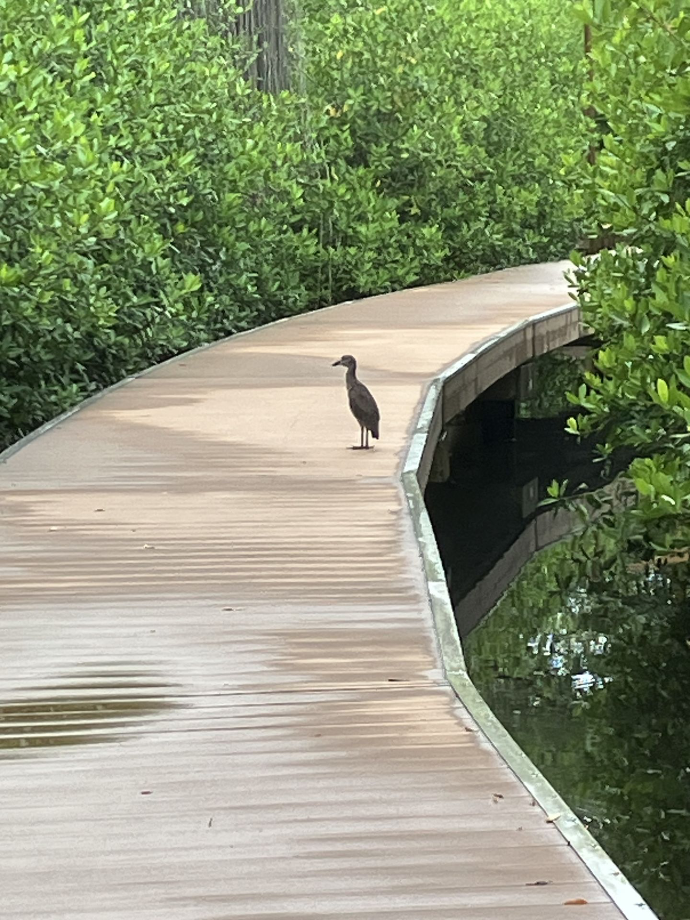

Nature in the mangrove park
This is the final article in our “Mangroves of Curaçao” series. In this series, we’ve covered the four mangrove species found on Curaçao and delved into the significance of mangroves and the challenges they face. Now, in the last article, we have explored the actions that are being taken or should be taken to protect or restore mangroves.
Mangroves are super important for protecting our land and sea, so it’s a great idea to make a plan for the whole of Curaçao to protect them. We also need to plant mangroves where they are needed. I’m asking the government to make this plan happen so we can all benefit. We can’t afford to let our underwater nature, which is a big part of our tourism industry, get worse. And we need to protect our coast from strong waves caused by storms, which will only get worse because of climate change.
The next series will take us on a whole new journey, exploring the fascinating world of beneficial mutations in humans. You might think of mutations as the bad guys that cause diseases, but here, we’re talking about the good guys that make us stronger and healthier. This series is a great way to understand how evolution works and how humans have changed over time. The first article in this series will dive into the basics of heredity and explore the topic of “Inheritance and Mutations”.