The Black Mangrove
(Published in the newspaper Amigoe on the 10st of September 2025)
In the last article, we talked about the red mangrove. It’s the closest to the sea of all the mangroves and has stilt roots that let it breathe way up high above the water. Now, let’s meet the black mangrove. It grows a bit further inland than the red mangrove and just above the tide line.
Name
The black mangrove is called "Avicennia germinans" in Latin. It is called black mangrove because the heartwood is dark brown to black. Just like the red mangrove, the black mangrove contains tannin that can be used in the tannery.
Manner of growth
The black mangrove is a small tree that can grow up to 12 meters high. The leaves are elongated and are smaller than those of the red mangrove. The flowers have 4 petals with a white colour.
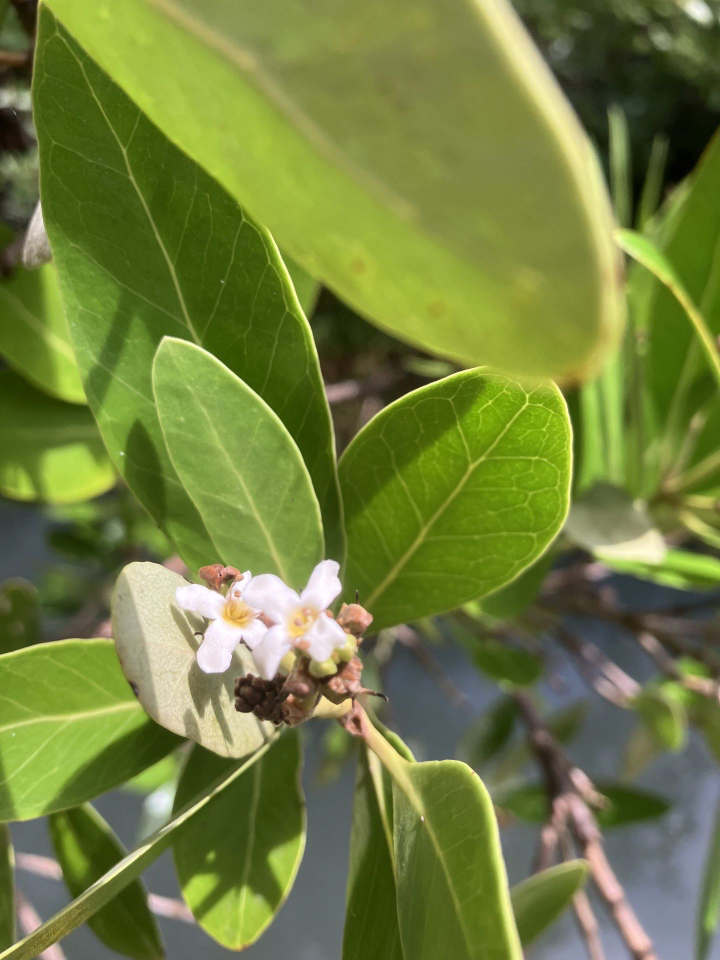
Flowers and leaves of the black mangrove in the Curaçao Rif Mangrove Park
The flowers produce nectar, are sweet-smelling and attract bees. The bees turn the nectar into a special kind of honey called mangrove honey.
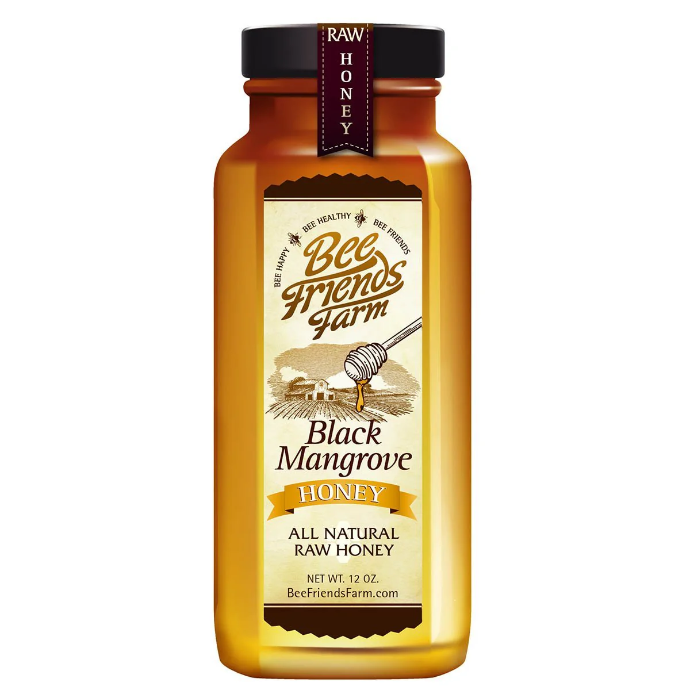
Honey from the flowers of the black mangrove
Respiration of the roots
In the last article, we learned that muddy, wet soil doesn’t have air. So, the black mangrove grows long underground cable roots that sprout hundreds of aerial roots (pneumatophores) from them. These aerial roots are like snorkels that stick out of the water (at low tide) and let the mangrove breathe. They have little holes called lenticels on them. That’s why black mangroves grow a bit inland than red mangroves. The pneumatophores aren’t very long, so they can easily get flooded. If they get flooded, they can’t breathe anymore. So, they grow closer to land where the water level is lower.
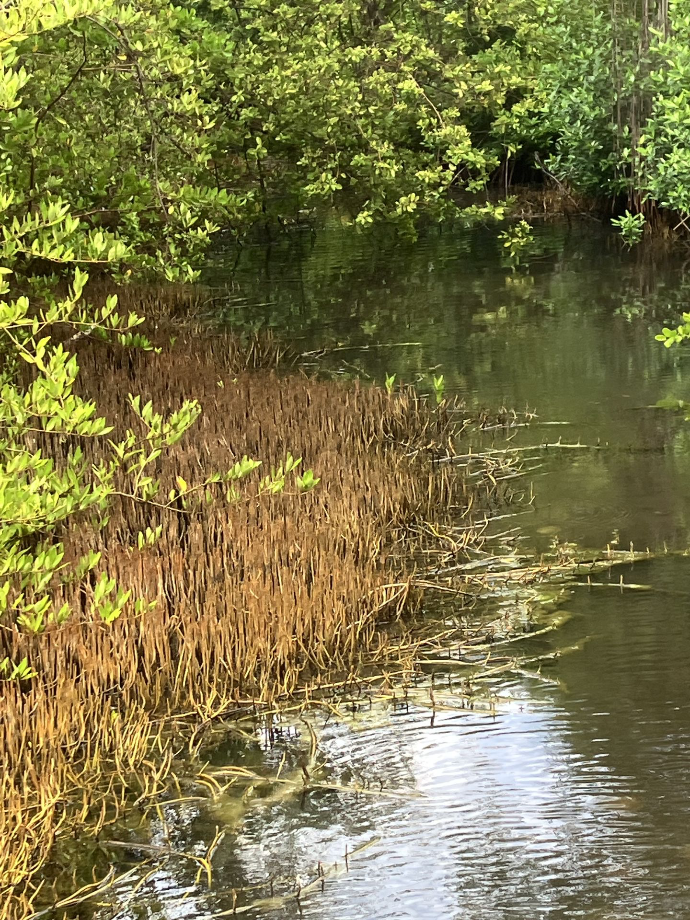
Aerial roots (pneumatophores)
Stability
In the soft mud, trees can easily topple over because the mud doesn’t offer much support. So, the red mangrove has stilt roots to keep it upright. But the black mangrove doesn’t have these stilt roots. Instead, it has long, horizontal underground cable roots. These roots act like a sturdy support system, keeping the black mangrove from falling over in the muddy ground.
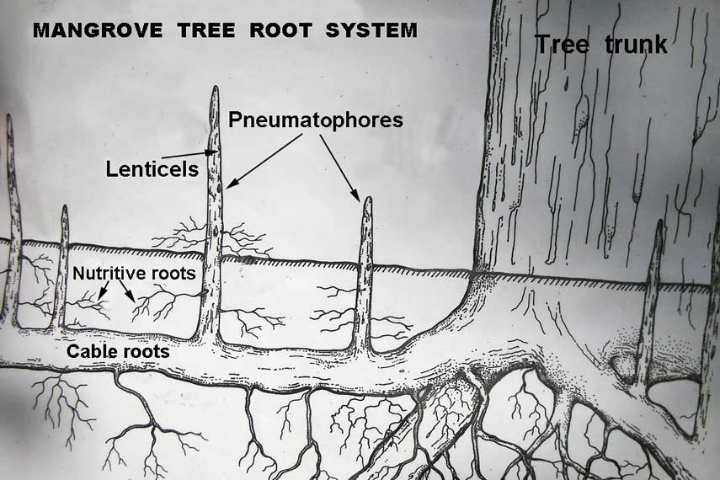
Cable roots
Credits: Langdale-Associates
Salt resistance
The red mangrove has roots that can filter out the salt from the water. But the black mangrove doesn’t have that special filter. Instead, it gets rid of the salt through its leaves. You can often see salt crystals on the leaves. These special cells that do this are called salt glands.
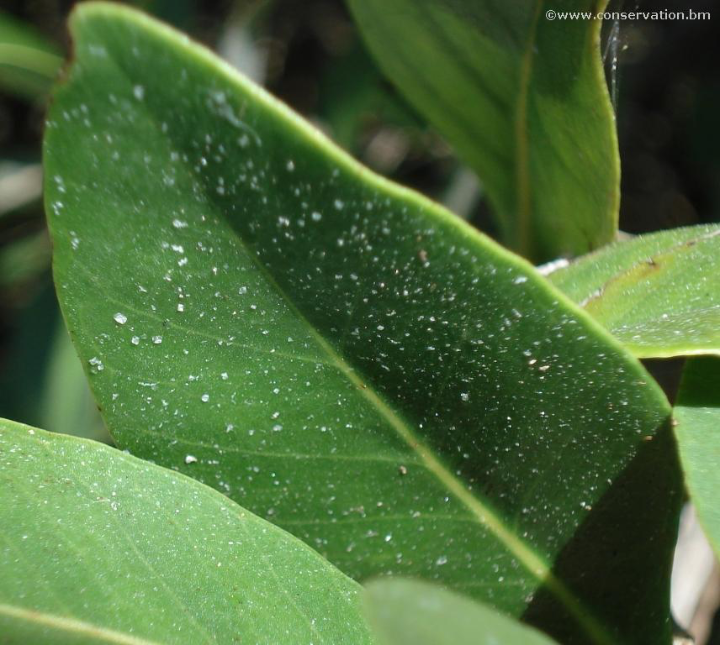
Salt crystals on the leaves of the black mangrove
Did you know that being able to excrete salt is also interesting for another reason? This unique mechanism could even be used in agriculture. You see, certain agricultural techniques and the rising sea level are making some agricultural areas saltier, making them less or no longer suitable for growing crops. But what if we could build this mechanism into agricultural crops? That way, we could still grow these crops on soils that would normally be too salty.
Did you know that some indigenous peoples used to collect salt from the leaves of the black mangrove? They used it for cooking and medicine, though it wasn’t a common practice. If you couldn’t get salt anywhere else, the salt on the black mangrove leaves could be a lifesaver!
This article discusses the black mangrove in detail. The black mangrove grows further inland because its aerial roots do not protrude very far above the water. The black mangrove can excrete salt through the leaves. In the next article the white mangrove will be discussed. The white mangrove grows even further inland than the black mangrove.