The silent threat to Curaçao's nature
(Published in the newspaper Amigoe on the 12th of August 2026)
If you drive across Curaçao, you will see how the island is changing. Where there used to be mondi, homes, resorts, roads and other new developments are appearing. The landscape is visibly changing and with it part of nature is disappearing. Everyone can see when a hill is being excavated or a piece of mondi is making way for buildings.
Much less visible is what is happening in nature that is still standing. A nature area may look healthy at first glance, while the original plants and animals are slowly disappearing. Not because construction is taking place, but because species from outside invade nature and disturb the natural balance. Sometimes it is a tree, such as the neem, that spreads further and further. Sometimes it is a predatory fish, such as the lionfish, that can drastically change life on the coral reefs.
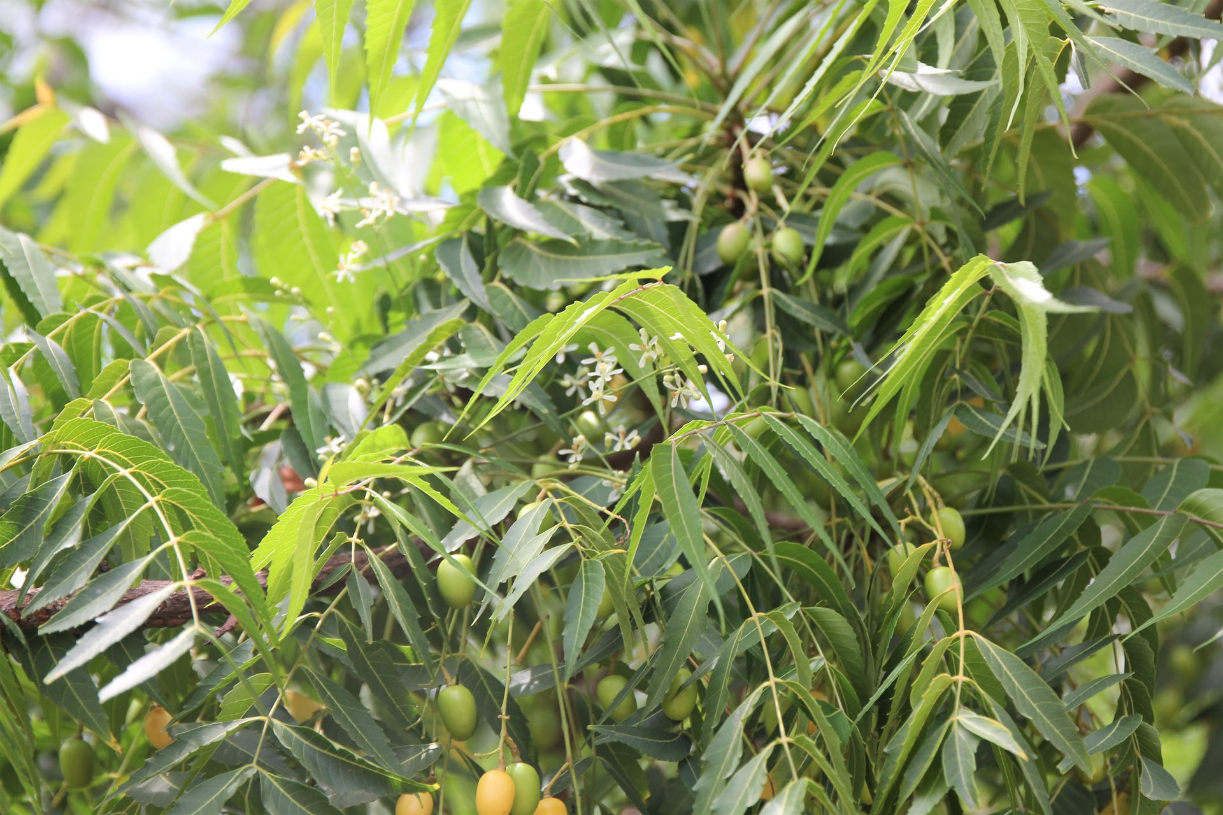
Neem (Photo: Erik Houtepen)
That is the silent threat of the nature on Curaçao: invasive species. The nature of Curaçao is therefore under pressure from two different threats. We see the first one every day. The second often develops unnoticed, but can be at least as drastic in the long term. To understand why, we must first consider why Curaçao's nature is so valuable.
The natural capital of Curaçao
Nature is often seen as something beautiful to be enjoyed. So is she. The rugged north coast, the mondi, the characteristic trees, the mangroves, the salt pans and the colorful coral reefs determine the face of Curaçao. But nature is much more than a beautiful backdrop. It is the natural capital of the island.
Just as financial capital provides returns, nature provides services that benefit everyone on a daily basis. Usually this happens unnoticed. Coral reefs break the force of waves before they reach the shore. Mangroves and seagrass beds are nurseries for fish and other marine animals. The vegetation in the mondi holds the soil during heavy rainfall and helps prevent large amounts of soil from entering the sea.
Without these natural processes, Curaçao would be more vulnerable to erosion, water quality would come under further pressure and the costs for coastal protection and nature restoration would be higher. Nature works day and night, without sending a bill for it.
A network of plants and animals
The value of nature is not only in the landscapes, but especially in the relationships between plants, animals and their habitat. Each species has a role to play. Flowering plants provide nectar to insects. Insects pollinate flowers, allowing plants to reproduce. Birds and bats spread seeds across the landscape. Reptiles and birds of prey help balance populations of smaller animals. Together they form a complex network that has developed over a long period of time. Especially on an island like Curaçao, that network is vulnerable. Many species adapted to the dry conditions and lived for a long time without certain predators or competitors.
When one link disappears from the network, the consequences are rarely limited to that one species. The disappearance of a plant can lead to fewer insects. Birds can lose food as a result, while seeds are less well distributed. A seemingly small change can have consequences for an entire ecosystem.
Everyone benefits from nature
Nature is not only important for plants and animals. The economy of Curaçao is also closely linked to it. Tourism is the clearest example of this. Visitors come to the island for its beaches, clear waters, underwater world, natural parks and special landscapes. The appeal of Curaçao is not only determined by hotels, shops and restaurants, but also by the combination of culture and nature.
Fisheries also depend on healthy ecosystems. Many fish species spend part of their lives among mangroves or seagrass beds before migrating to the reefs. When these habitats disappear or decline, this can have consequences for fish stocks.
In addition, nature plays an important role for residents themselves. Hiking, diving, mountain biking, bird watching or simply enjoying the peace and quiet in the mondi contributes to health and well-being. Nature offers space for relaxation and forms a counterbalance to an increasingly built-up environment.
Part of the identity
Moreover, nature has a cultural value that is difficult to express in money. The mondi, the kadushi, the watapana, the lora, the rugged north coast and the sheltered bays belong to Curaçao as the Handelskade and the Pontjesbrug do. They are part of the identity of the island. They are images, sounds and landscapes with which residents connect memories and a sense of home.
When the original nature disappears, Curaçao does not only lose plants and animals. The island is also losing some of its own character. Moreover, a green landscape is not automatically a natural landscape. When original species are replaced by a few dominant alien species, the area may still look green while biodiversity has greatly declined.
What are invasive species?
Invasive species are plants, animals or other organisms that end up outside their original range, manage to establish themselves and then cause damage to nature, economy or health. Not every alien species is automatically invasive. Many imported plants and animals cause few problems. In the gardens of houses in the city, many exotic species can often be seen that do not cause damage to nature. Only when a species spreads quickly, has hardly any natural enemies, displaces or eats native species, spreads diseases or changes an ecosystem, do we speak of an invasive species. An invasive species is therefore by definition harmful!
The neem and the lionfish show how different invasive species can be. One grows on land, the other lives in the sea. One is seen by many people as an ordinary tree, the other is now known among divers and fishermen. However, both can change the composition and functioning of their environment.
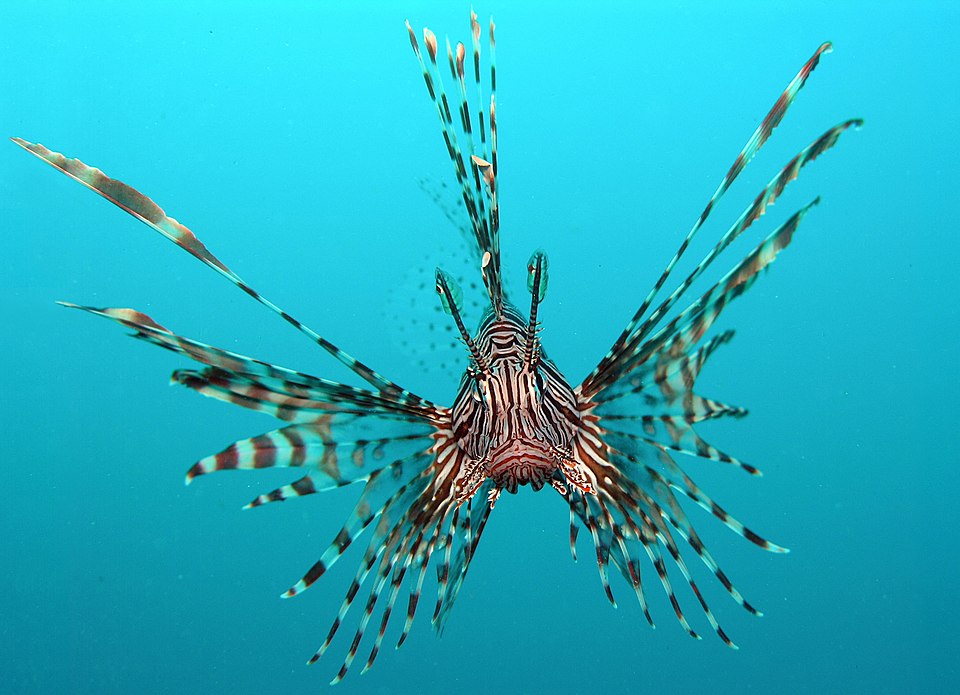
Lionfish (Photo Wikipedia)
Why islands are extra vulnerable
Islands are among the areas most vulnerable to invasive species worldwide. Because nature has developed in relative isolation, many native species are not adapted to new competitors, predators or pathogens. Moreover, there is little room to divert. Once an invasive species spreads across Curaçao, a vulnerable native species cannot easily move to another area.
The damage often remains invisible for a long time. There is still vegetation, but not the same vegetation anymore. There are still birds flying, but perhaps fewer species. Underwater, a reef can still look colorful, while the composition of the ecosystem is already changing. Only when a familiar species has become rare or an invasive species occurs everywhere, it becomes clear how much has been lost. At that time, control is usually more difficult and expensive than if early intervention had been taken.
Knowledge as a first step
Combating invasive species does not start with traps or pesticides, but with knowledge. Those who do not know which species are harmful and why will often not even notice the deterioration of nature. The distribution of neem on land and the lionfish's presence in the Caribbean Sea show how one species can impact an entire ecosystem. That is precisely why recognition, prevention and early intervention are so important.
This requires control of the import of plants, animals and goods, rapid notification of new species, careful nature management and clear choices in spatial planning. It also requires the realization that an area that is still green is not necessarily ecologically healthy.
Start of a series
This article is the beginning of a series on invasive species in Curaçao. The following articles focus on one species each. How did this species end up on the island? Why is it so easy to spread here? What damage does it cause to nature, economy or living environment? And what can the government, nature organizations, companies and residents do? Some species are small and barely visible. Others, such as the neem and the lionfish, are known to many residents. They have in common that they can change the original nature of Curaçao.
The stake of this series is therefore greater than combating some unwanted plants or animals. It is about preserving the value of Curaçao's nature: as a habitat, coastal protection, economic base, place for relaxation and part of the island's identity. We immediately recognize the visible threat to buildings. The silent threat of invasive species requires us to learn to look better, before a landscape that still seems green has lost its original nature forever.